Thermocouples selected for the temperature and medium you actually have
A thermocouple generates a small voltage when its measuring junction and reference junction are at different temperatures. That voltage is converted into a temperature reading. Which construction works depends less on the nominal temperature than on abrasion, vibration, atmosphere and installation — so we start from those conditions.
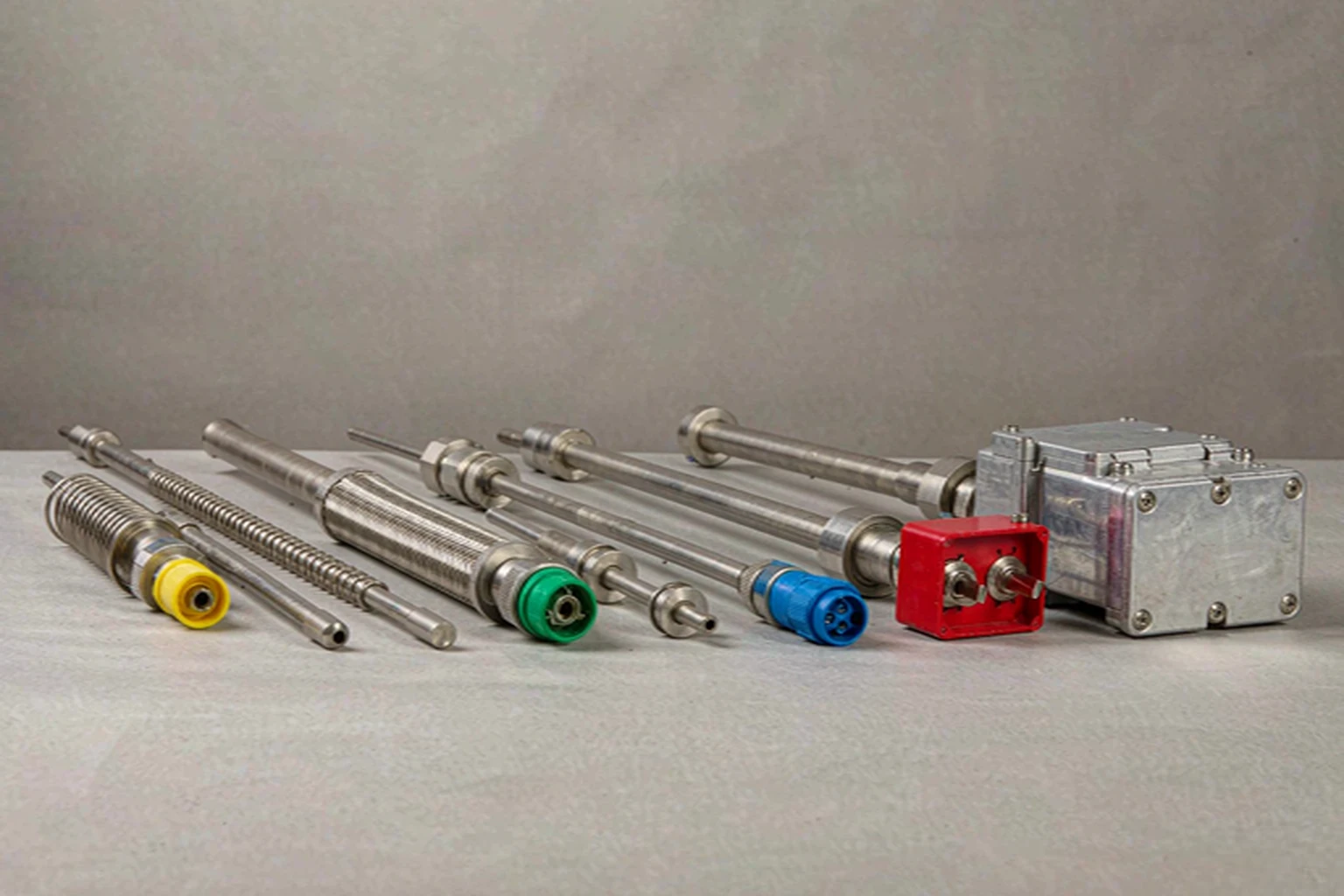
Thermocouple types
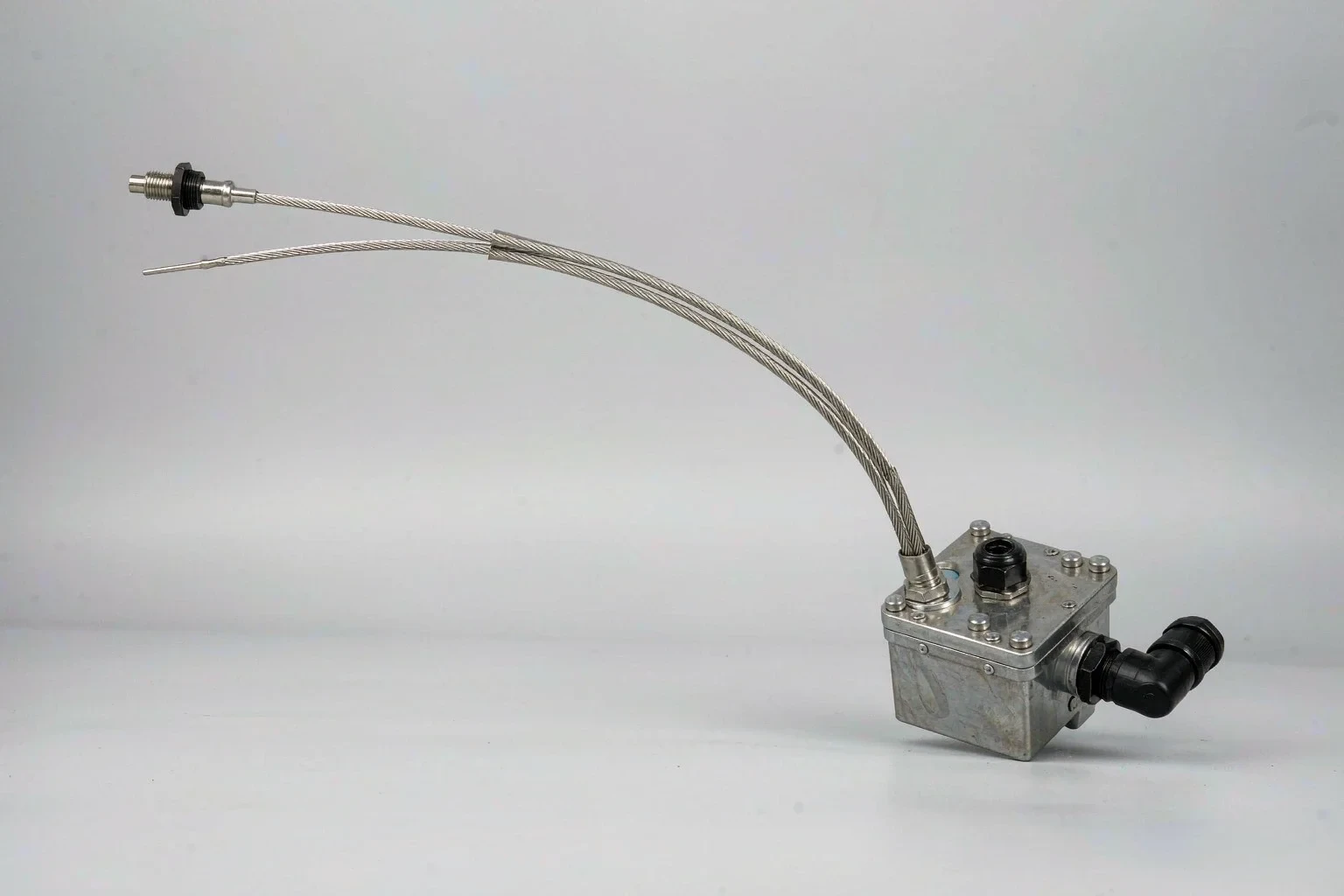
Armoured Thermocouple
The sensing wires are packed into a metal sheath with mineral insulation, then drawn down to a compact probe. The sheath can be bent to route the sensing tip into tight spaces while keeping the junction protected. Diameter, sheath material and type are built to the operating conditions.
Typical application: Furnaces, pipelines and equipment where the probe must follow a curved route or resist pressure.
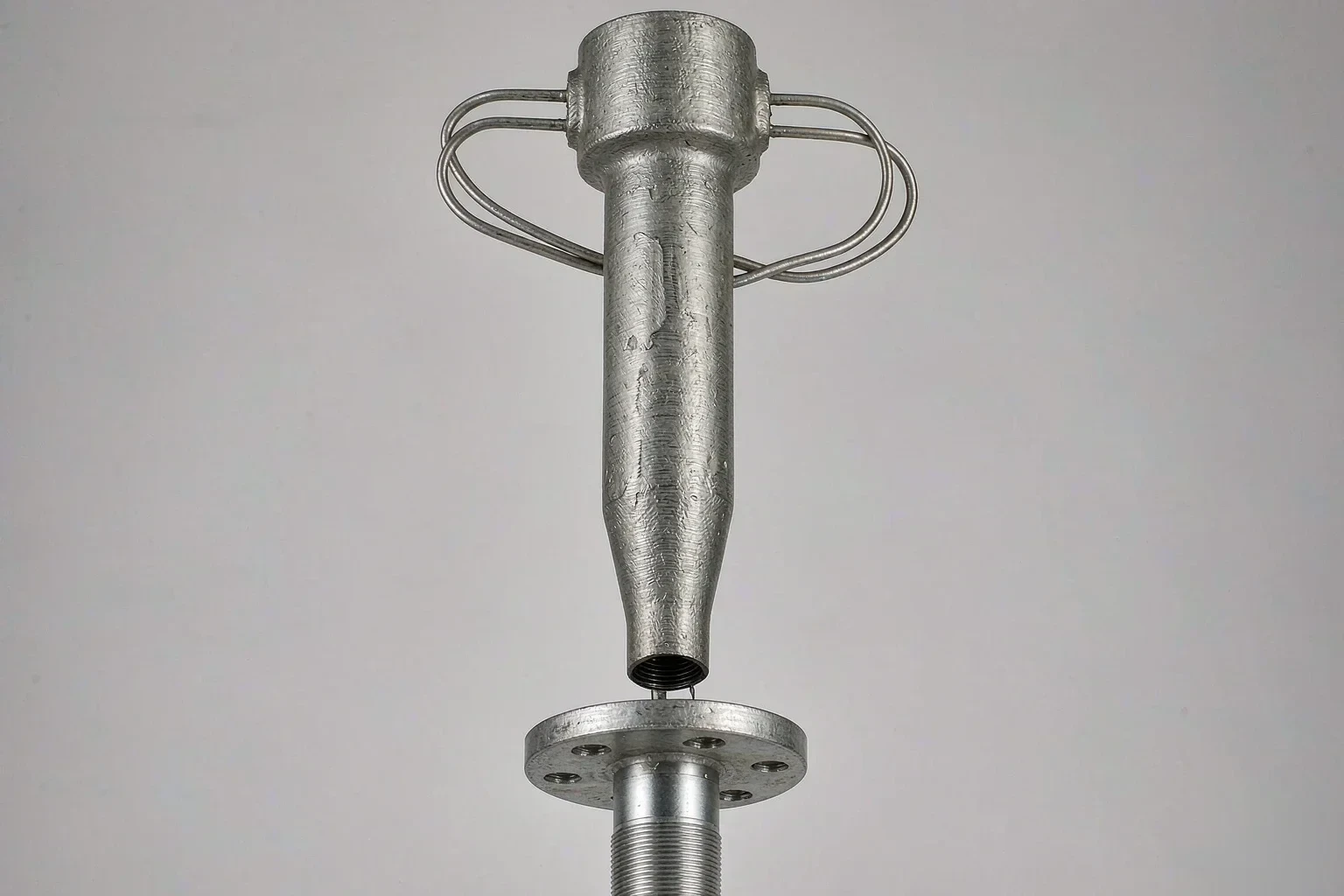
Wear-Resistant Thermocouple
A thickened, hardened protection tube shields the sensing element from particle erosion and thermal shock. The protection head material is chosen after the medium, temperature and gas velocity are confirmed — there is no universal tube that survives every abrasive duty.
Typical application: Circulating fluidised-bed boilers, cement kiln heads and tails, pulverised-coal lines, smelting furnaces.
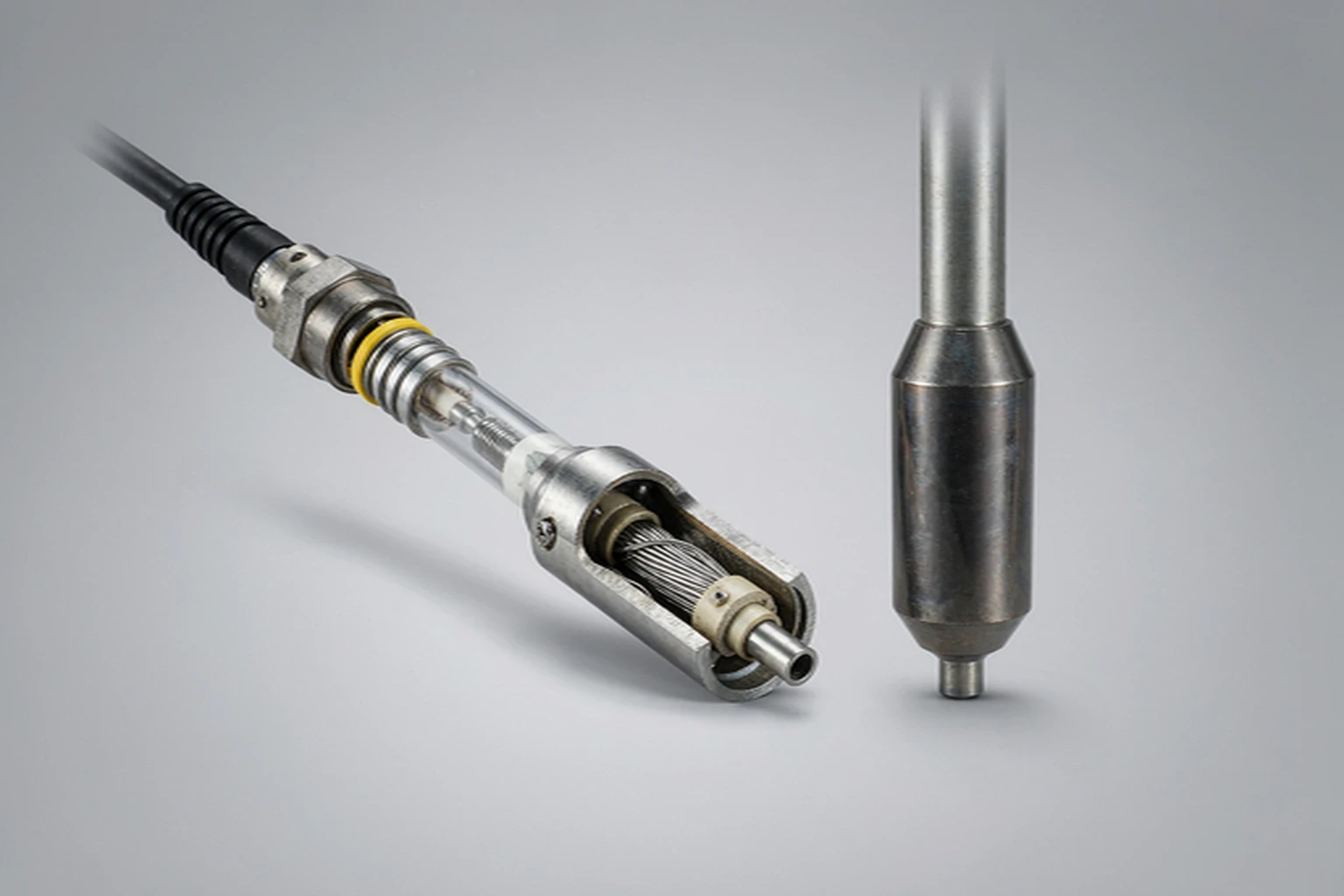
Assembled Thermocouple
A replaceable sensing element sits inside a protection tube with a terminal head at the outer end. When the element ages, the insert can be changed without removing the tube from the process. Connection form and insertion length are configurable.
Typical application: General process temperature measurement in chemical, power and light-industry plants.
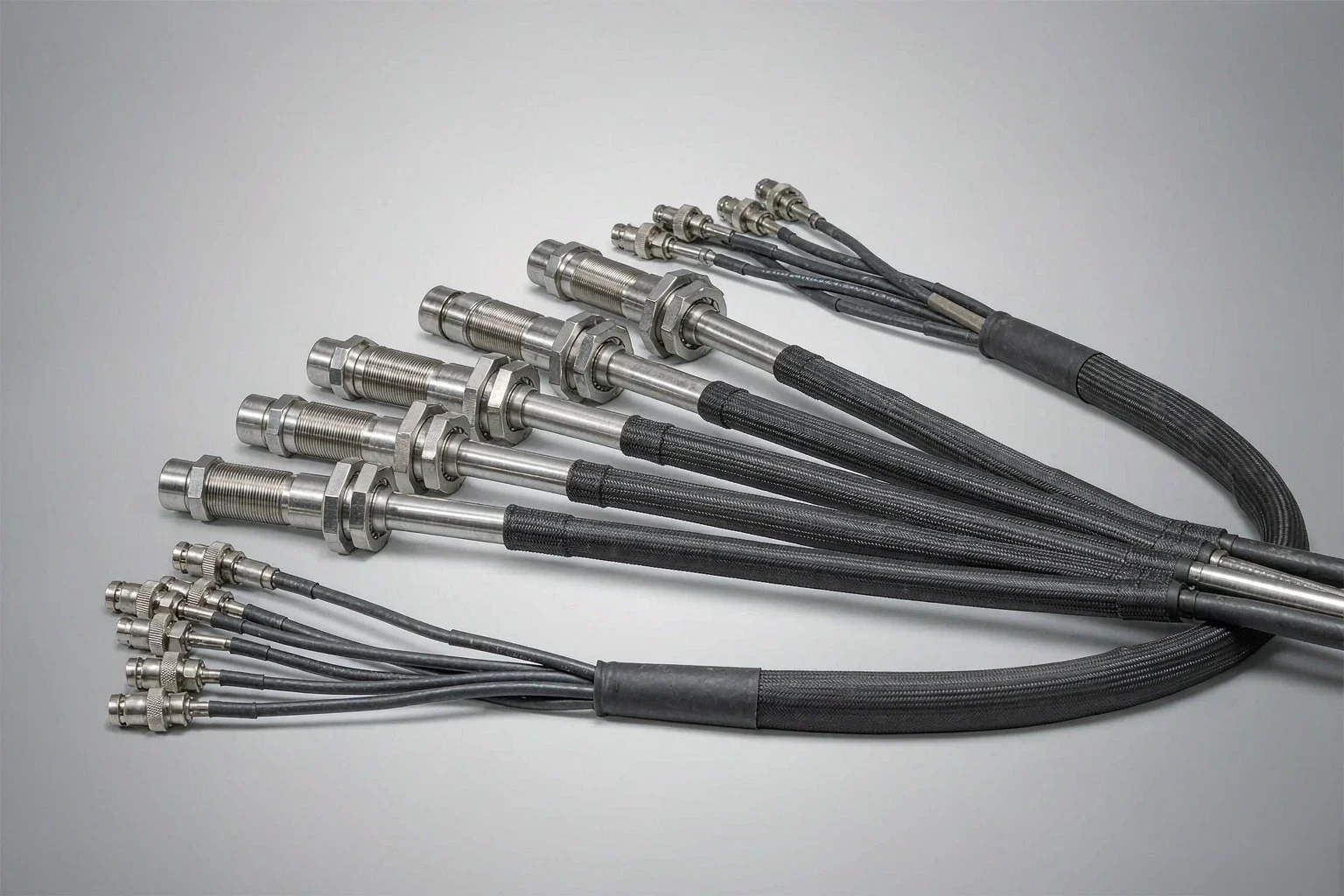
Multi-Point Thermocouple
Several measuring junctions are placed at different depths along one probe, with individual outputs. One insertion point therefore gives a temperature profile rather than a single reading. The number of points and spacing are built to the vessel.
Typical application: Large reactors, annealing furnaces and tanks where temperature stratification matters.
Specifications
| Model | Measuring range | Accuracy | Type | Sheath material | Output signal |
|---|---|---|---|---|---|
| Armoured Thermocouple | configurable to the operating conditions | configurable to the operating conditions | configurable to the operating conditions | configurable to the operating conditions | configurable to the operating conditions |
| Wear-Resistant Thermocouple | configurable to the operating conditions | configurable to the operating conditions | configurable to the operating conditions | configurable to the operating conditions | configurable to the operating conditions |
| Assembled Thermocouple | configurable to the operating conditions | configurable to the operating conditions | configurable to the operating conditions | configurable to the operating conditions | configurable to the operating conditions |
| Multi-Point Thermocouple | configurable to the operating conditions | configurable to the operating conditions | configurable to the operating conditions | configurable to the operating conditions | configurable to the operating conditions |
All technical specifications are confirmed against the actual operating conditions; values not confirmed are stated as configurable.
Frequently asked questions
Should I choose a thermocouple or an RTD for my measuring point?
Use a thermocouple where the temperature is high, changes quickly, or the probe must be small and rugged. Use an RTD where the range is moderate and repeatability over time matters more. Send your range and medium and we will recommend one.
Why does my thermocouple reading drift even though the instrument is fine?
Common causes are a worn protection tube, cold-junction compensation at the terminal head, a loose connection, or sensing wire contamination. Check the installation before replacing the sensor.
Can you supply a type and connection that are not listed?
Yes. Type, junction form, sheath material, insertion length and process connection are selected against the operating conditions. Tell us the medium and installation.
Have a measuring point to spec?
Send the medium, operating temperature and installation. We will come back with the instrument type, connection and signal.