Flow meters selected for the fluid, not for the catalogue page
Flow measurement starts with the fluid. Conductive liquids can be measured without moving parts by electromagnetic induction; steam and gas often suit vortex or thermal principles; clean liquids and gases suit turbine meters. Ask the wrong question and even an accurate meter gives a wrong total. We start with what is in the pipe.
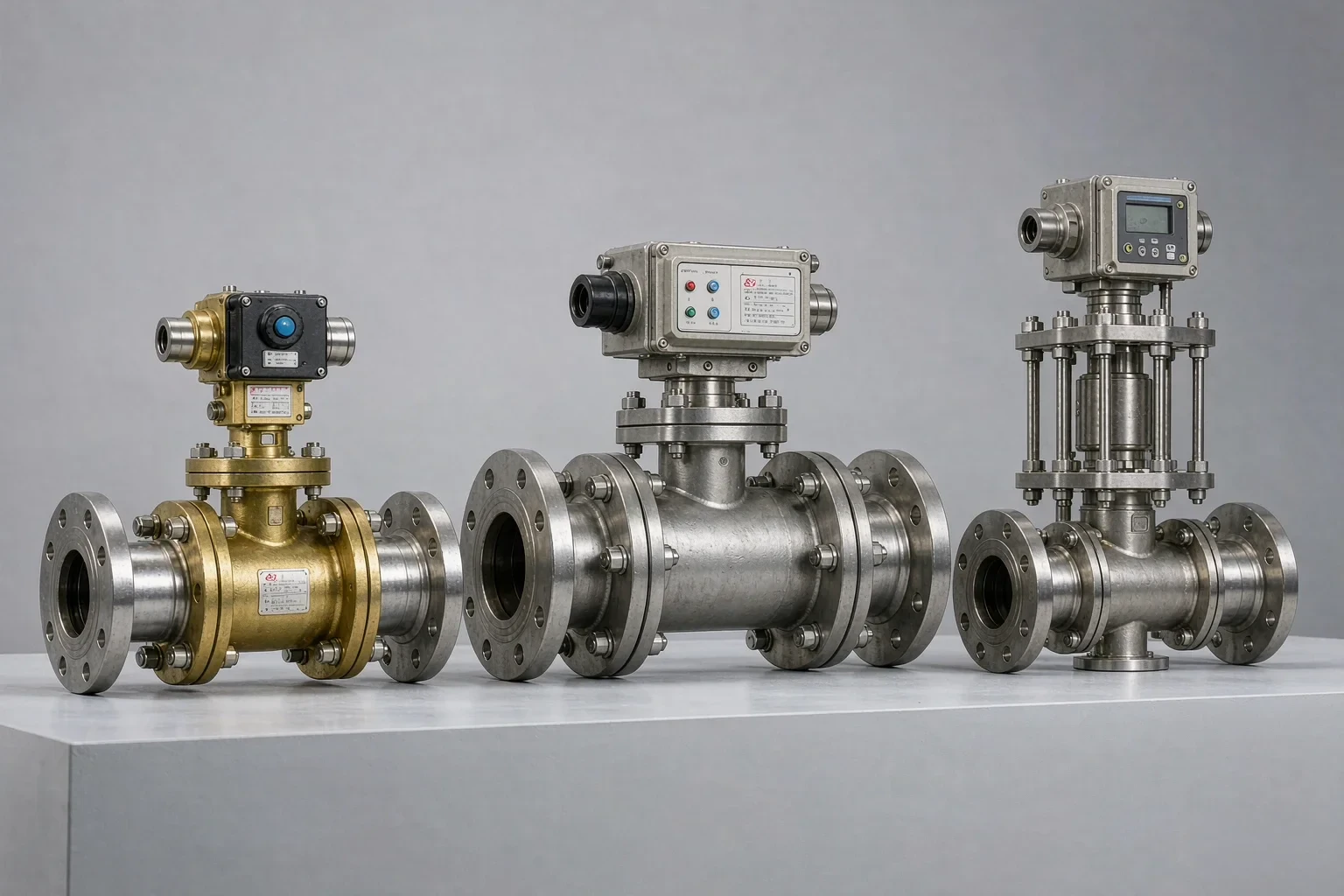
Flow meter types
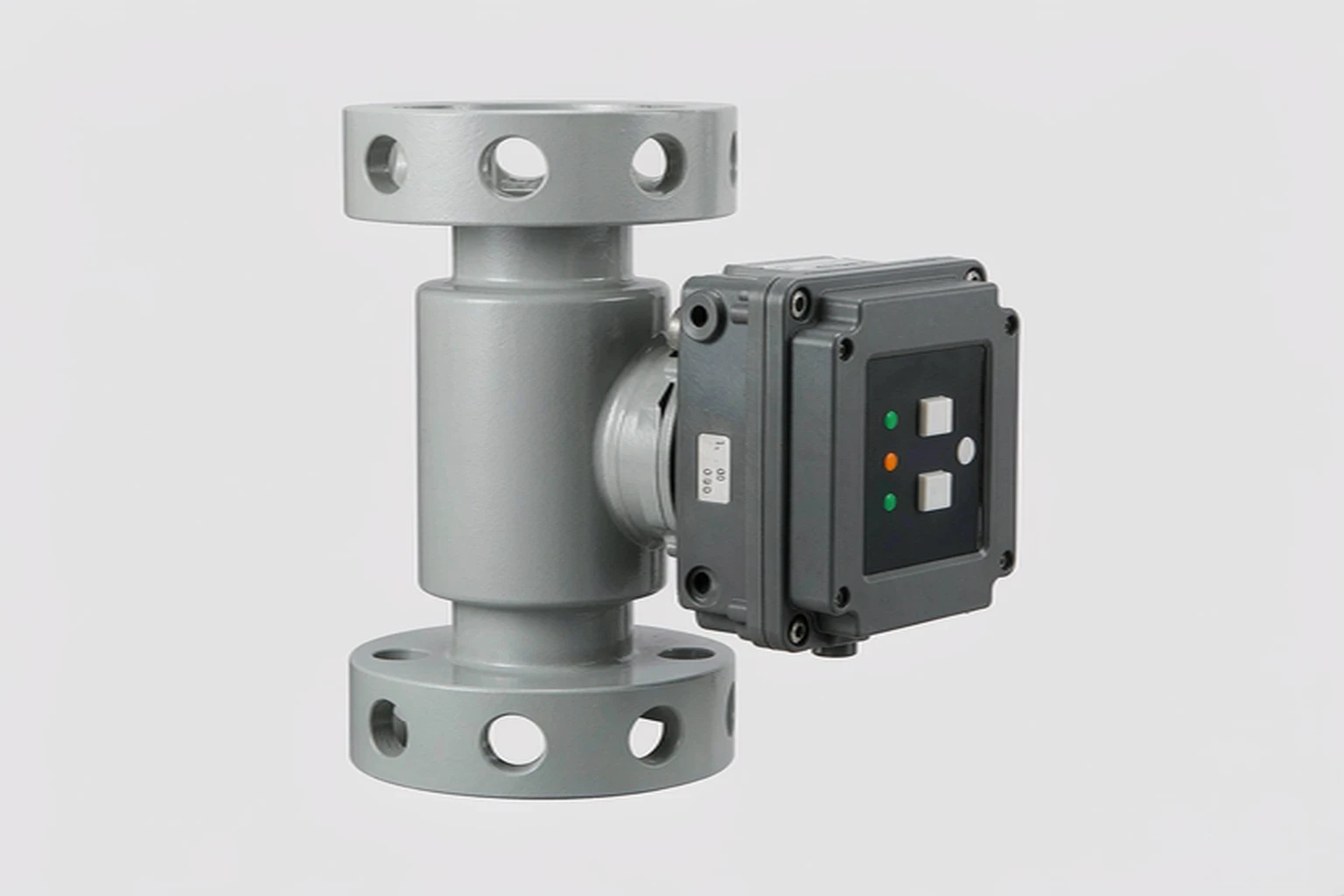
Electromagnetic Flow Meter
Based on Faraday's law: a conductive liquid moving through a magnetic field generates a voltage proportional to its velocity. There are no moving parts in the flow path, so pressure loss is low and the reading is unaffected by viscosity. The medium must be conductive; liner and electrode materials are chosen for corrosion.
Typical application: Water, wastewater, slurry and chemical liquids in full pipes.
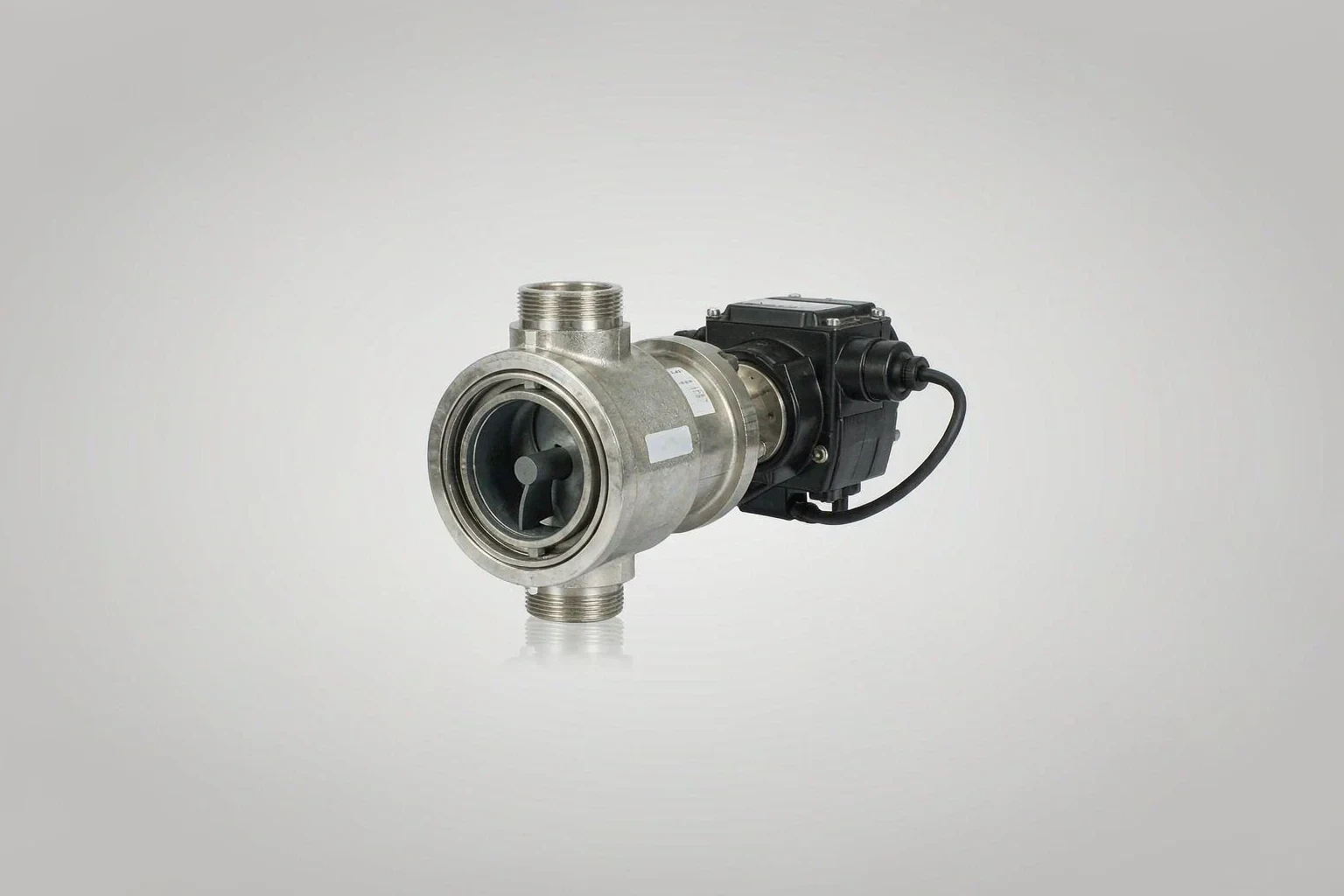
Vortex Flow Meter
A bluff body placed in the stream sheds vortices alternately, and the shedding frequency is proportional to flow velocity. One meter can measure liquid, gas and steam. The installation needs straight pipe sections and protection from vibration.
Typical application: Steam, compressed air, gas and low-viscosity liquids in process lines.
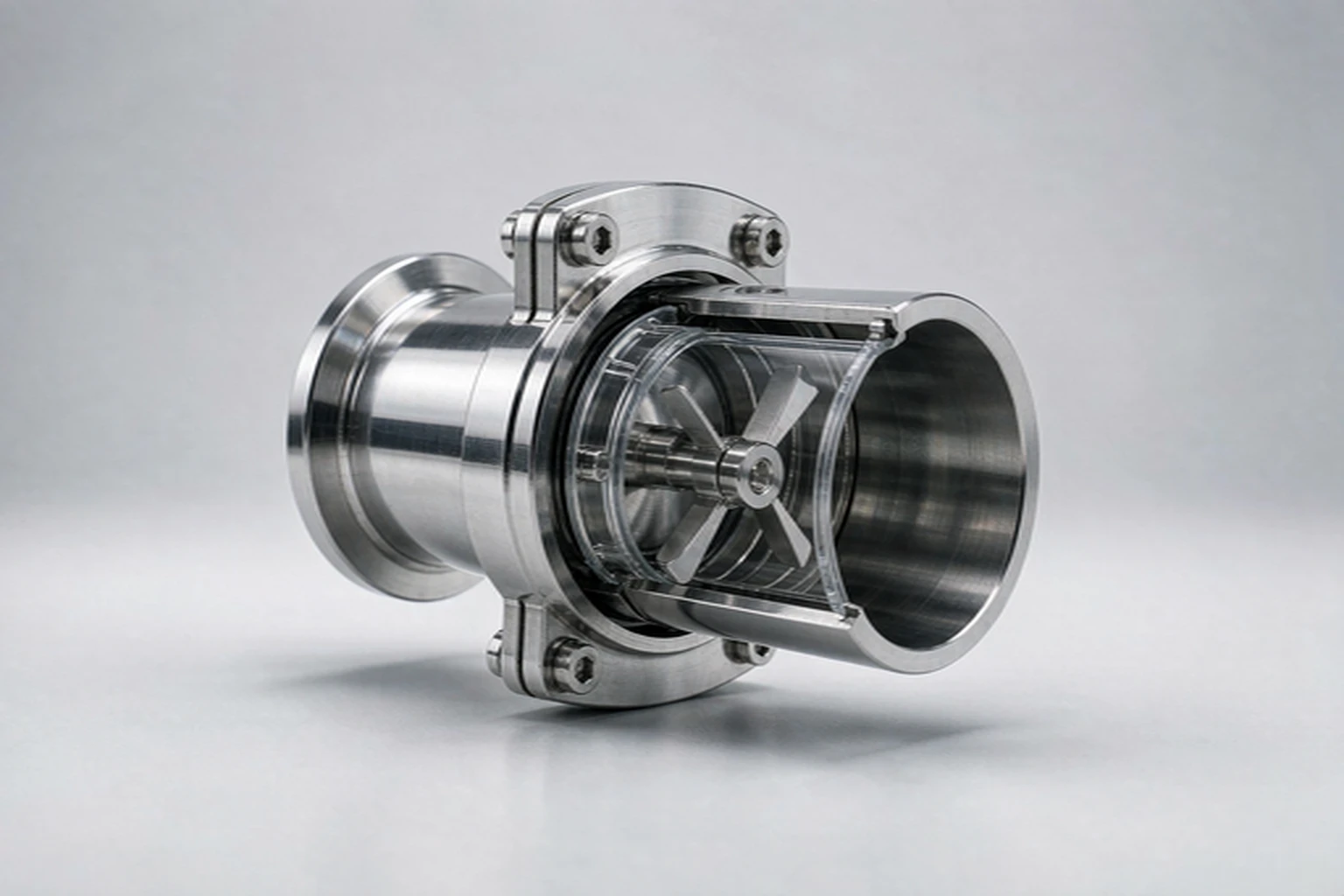
Turbine Flow Meter
Fluid passing through the meter spins a turbine; rotation speed is proportional to flow rate. It gives good repeatability in clean fluids but is affected by dirt and by changes in fluid density and viscosity.
Typical application: Clean liquids, gas metering and calibration or batching duties.
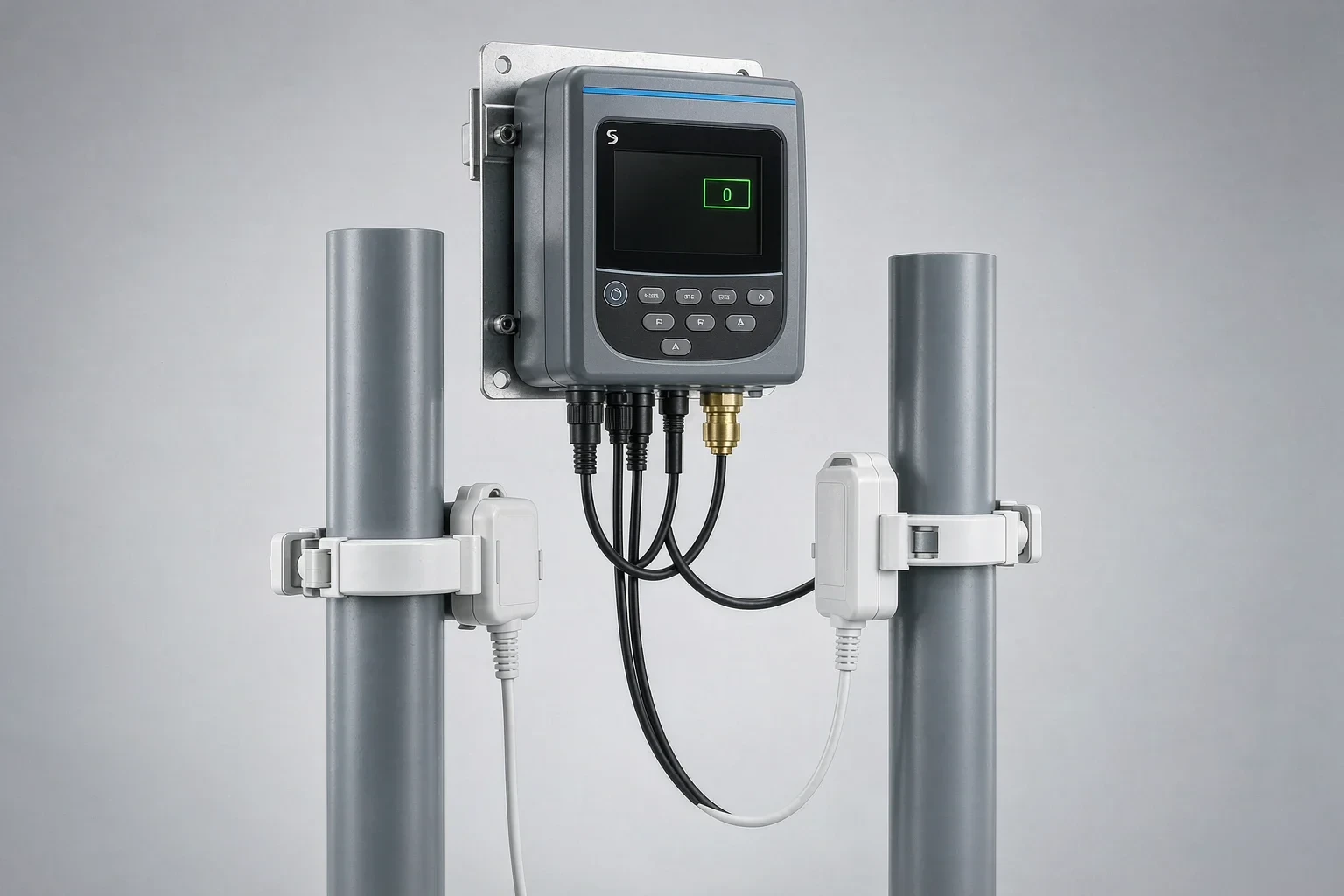
Ultrasonic Flow Meter
Measures flow from the time difference of ultrasonic signals travelling with and against the flow. Clamp-on versions need no pipe modification, which suits retrofits. Accuracy depends on pipe material, wall condition and correct sensor spacing.
Typical application: Water, heating circuits and large pipes where shutting down the line is not an option.
Specifications
| Model | Measuring range | Accuracy | Output signal | Liner / body | Process connection |
|---|---|---|---|---|---|
| Electromagnetic Flow Meter | configurable to the operating conditions | configurable to the operating conditions | configurable to the operating conditions | configurable to the operating conditions | configurable to the operating conditions |
| Vortex Flow Meter | configurable to the operating conditions | configurable to the operating conditions | configurable to the operating conditions | configurable to the operating conditions | configurable to the operating conditions |
| Turbine Flow Meter | configurable to the operating conditions | configurable to the operating conditions | configurable to the operating conditions | configurable to the operating conditions | configurable to the operating conditions |
| Ultrasonic Flow Meter | configurable to the operating conditions | configurable to the operating conditions | configurable to the operating conditions | configurable to the operating conditions | configurable to the operating conditions |
All technical specifications are confirmed against the actual operating conditions; values not confirmed are stated as configurable.
Frequently asked questions
Why is my electromagnetic flow meter reading zero?
Common causes are an empty or partly filled pipe, a broken electrode signal path, improper grounding, or a medium with conductivity too low for the meter. Check the pipe condition first.
Can one flow meter handle both liquid and gas?
Some principles can, but the calibration and installation differ. Tell us the fluid phases and we will confirm whether a single meter is realistic.
Do I have to cut the pipe to install a flow meter?
For inline meters, yes. Clamp-on ultrasonic versions can be installed on an existing pipe if the material and wall condition allow it.
Have a measuring point to spec?
Send the medium, operating temperature and installation. We will come back with the instrument type, connection and signal.