RTD sensors when repeatable temperature readings matter more than range
An RTD measures temperature through the change in electrical resistance of a metal, usually platinum. A Pt100 element is 100 ohms at 0 °C, which makes the relationship between resistance and temperature well defined and easy to check. RTDs are the usual choice where the range is moderate and the reading must stay stable over time.
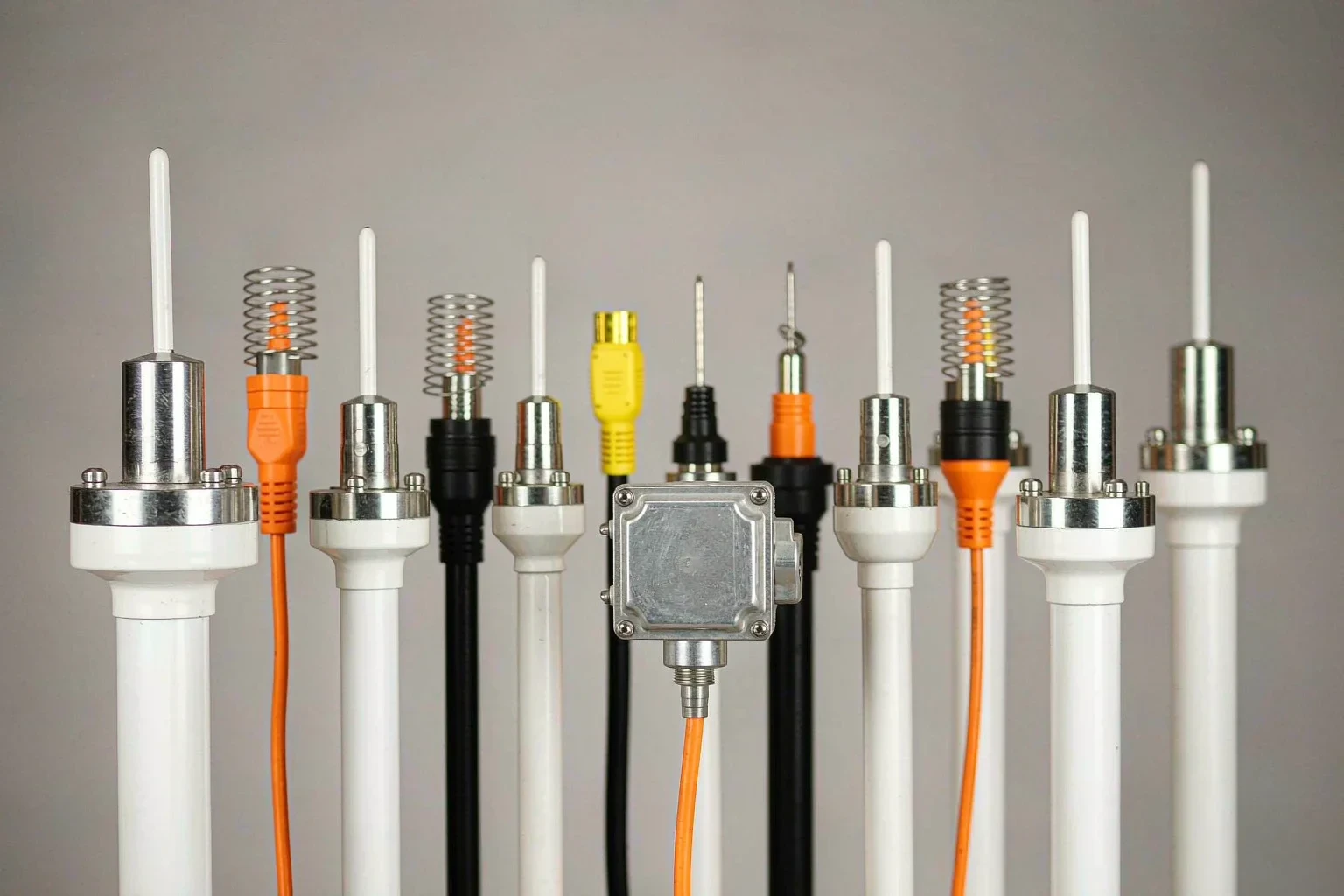
RTD types
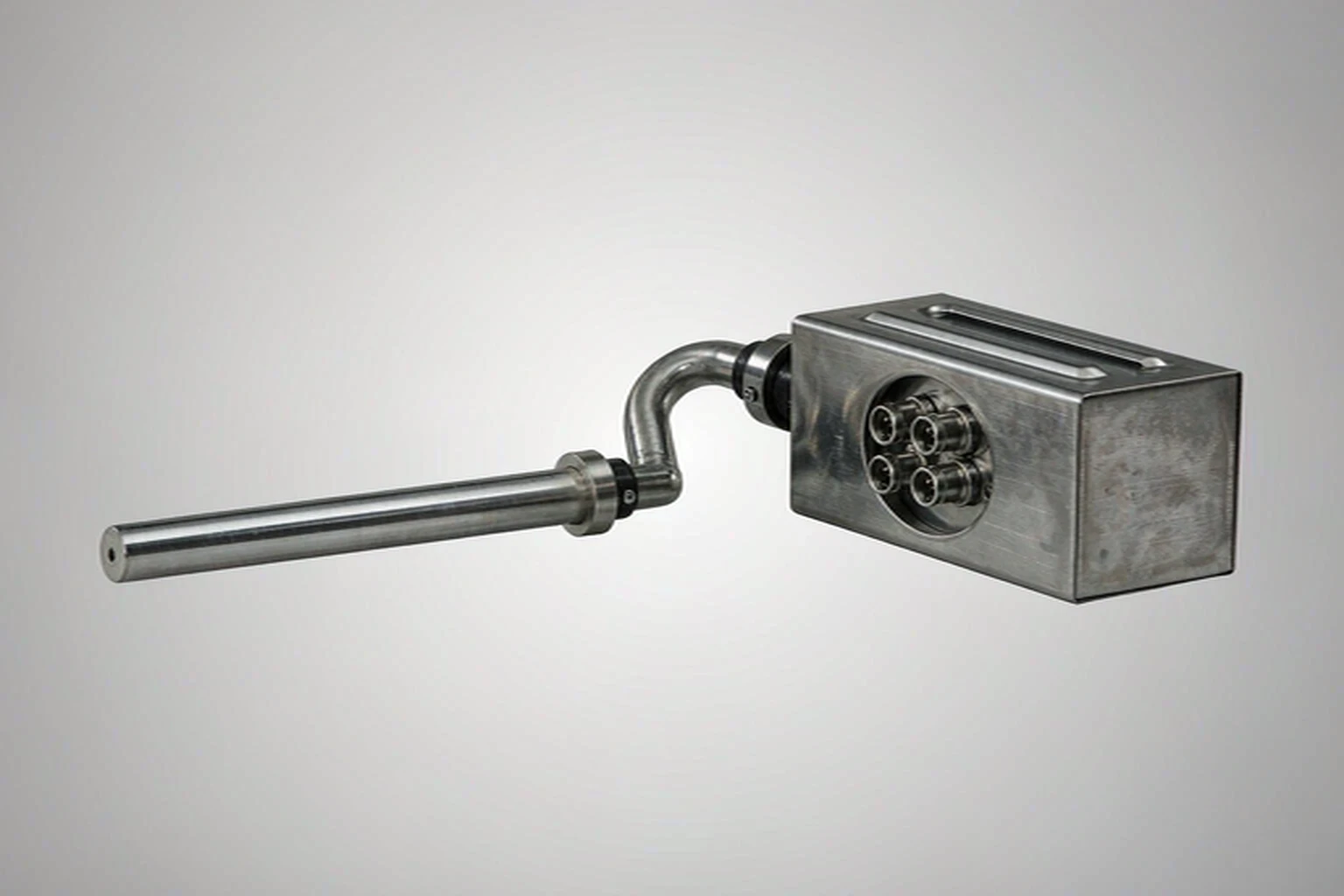
Platinum RTD (Pt100)
A platinum sensing element whose resistance rises predictably with temperature. The signal is linear enough for control systems and holds its calibration better than a thermocouple over a moderate range. Element class and wiring configuration are specified to the application.
Typical application: Process lines, bearings and equipment where stable readings over long periods are required.
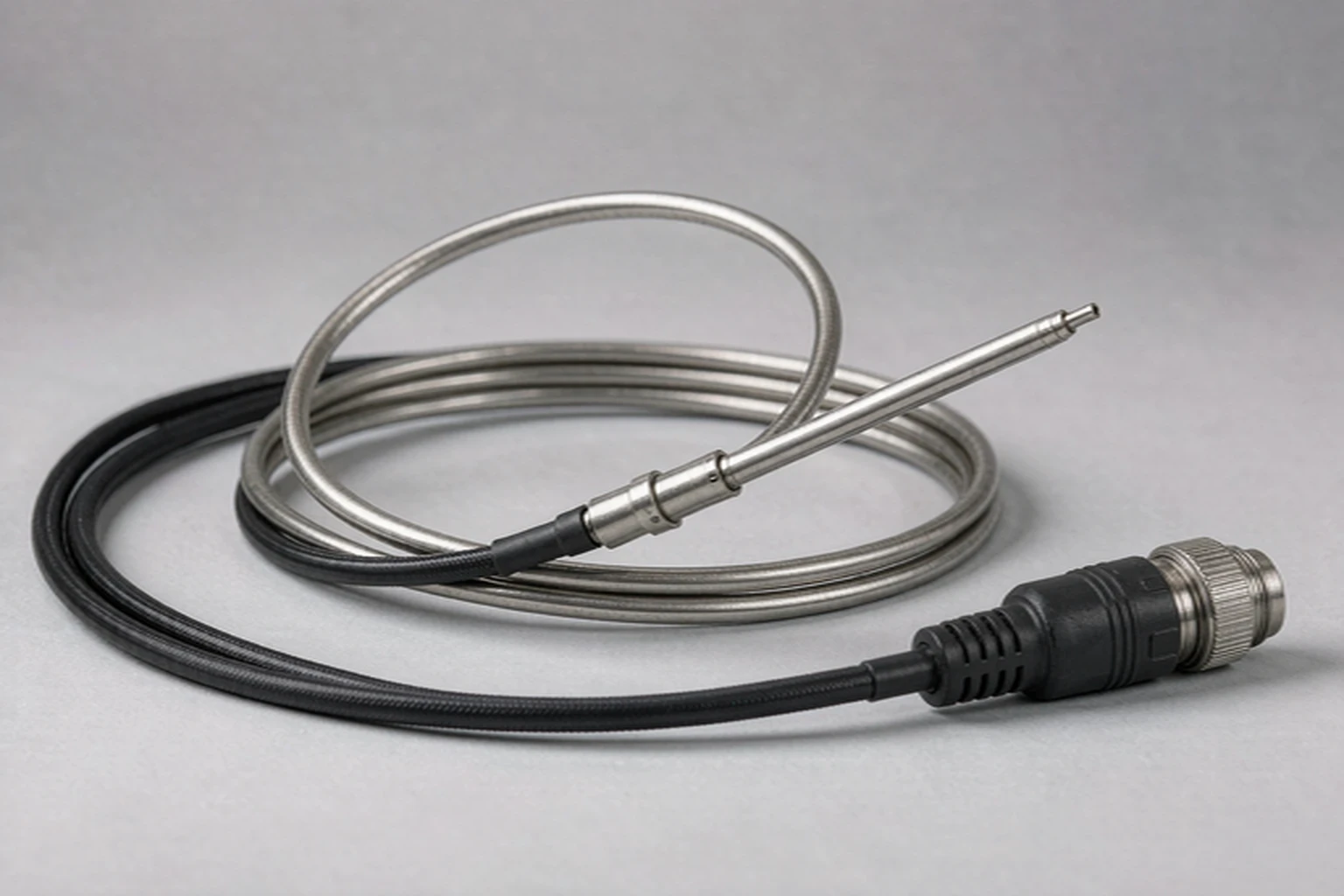
Armoured RTD
The element is sealed inside a metal sheath with mineral insulation. The assembly resists vibration, bending and pressure, and the sheath material is chosen for the medium. Sheath diameter and insertion length are configurable.
Typical application: Pipes, vessels and outdoor installations with mechanical stress or limited access.
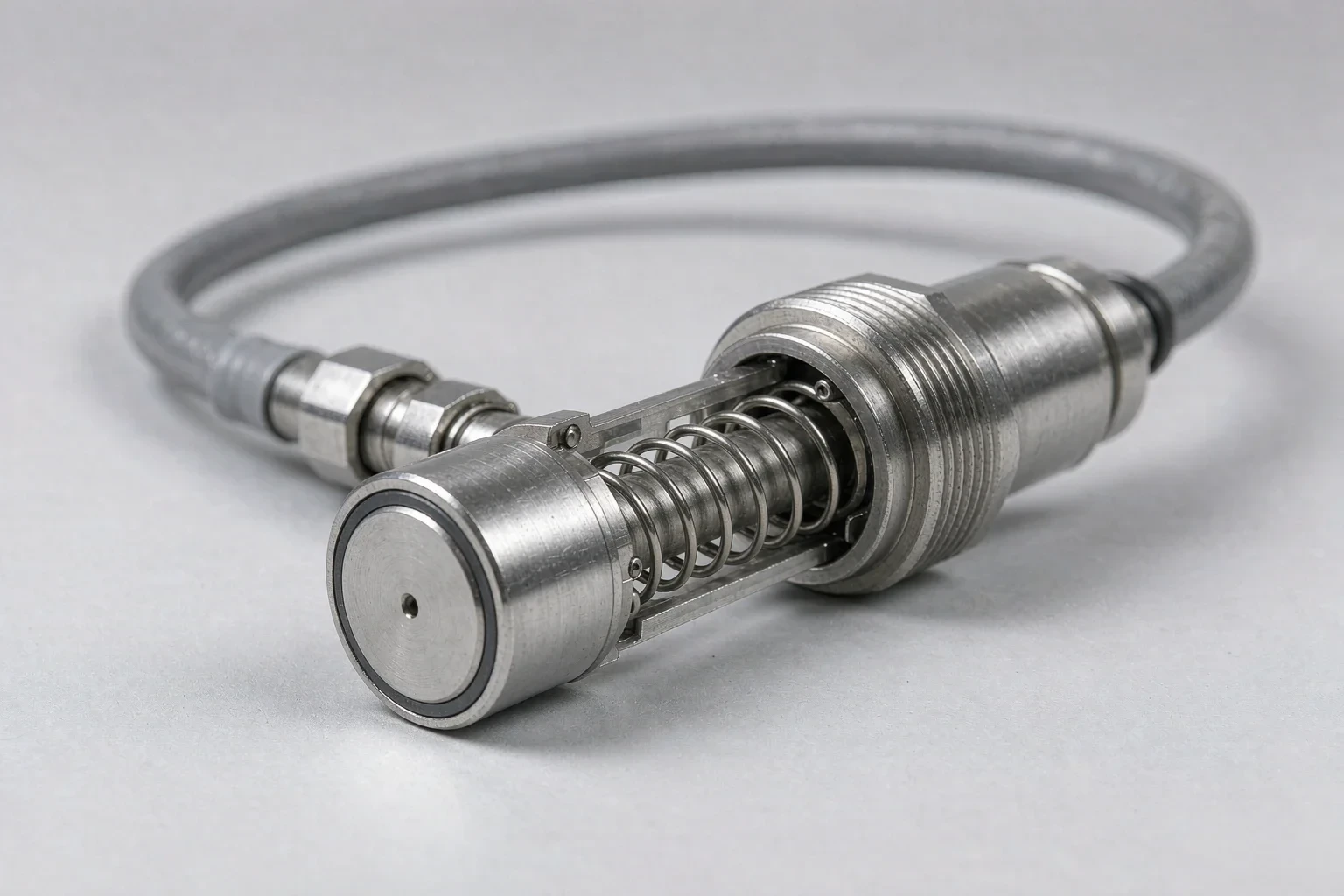
Surface / End-Face RTD
The sensing tip is spring-loaded against a flat surface so it follows the temperature of the part rather than the surrounding air. Contact pressure and tip construction are selected for the surface being measured.
Typical application: Turbine and motor bearings, pipe surfaces and other solid bodies.
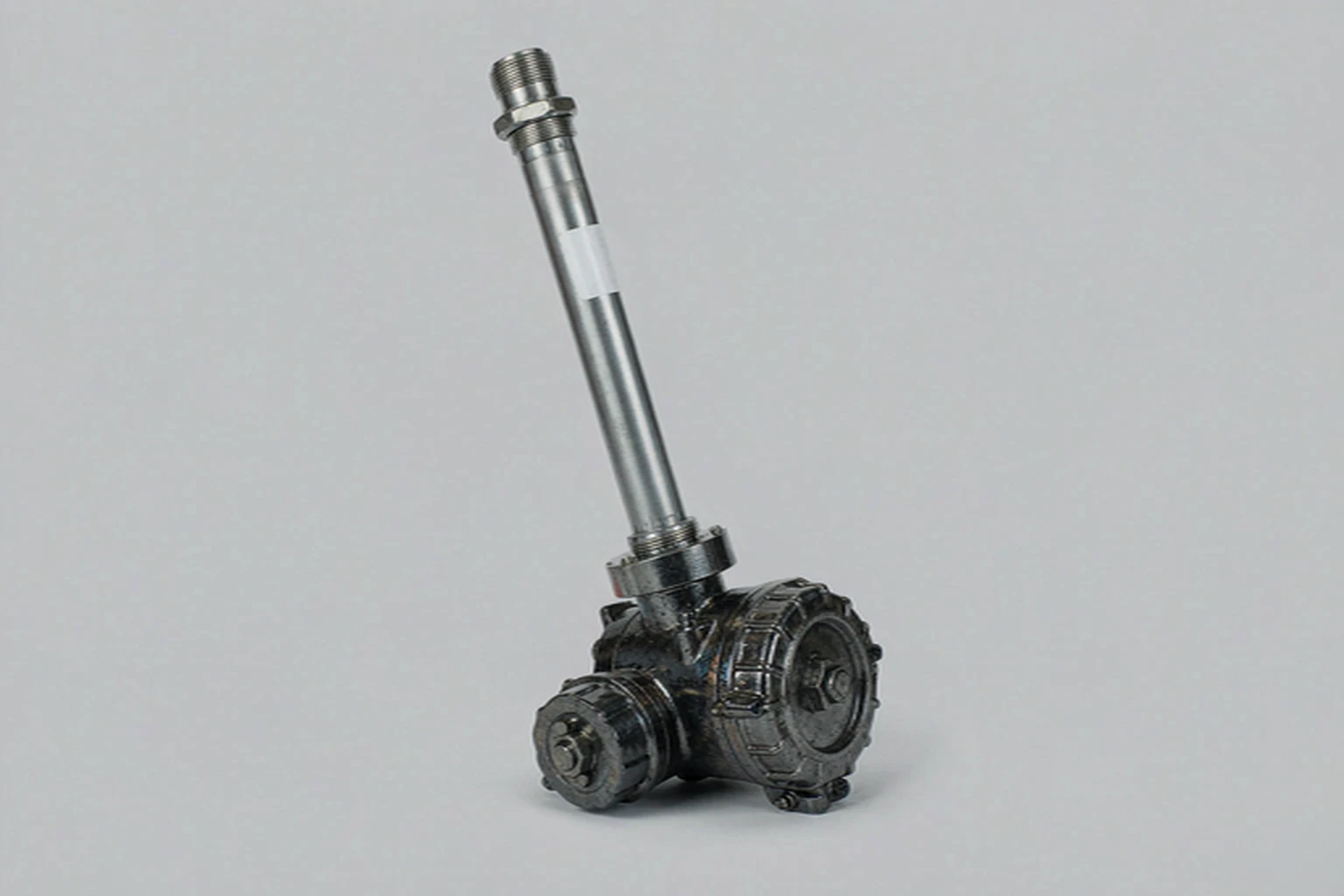
Explosion-Proof RTD
The head is built as a protected enclosure so a spark inside cannot ignite a flammable atmosphere outside. The connection and enclosure form are selected to the area classification supplied by the customer.
Typical application: Petrochemical, gas processing and paint or solvent areas with a classified zone.
Specifications
| Model | Measuring range | Accuracy | Type | Element material | Output signal |
|---|---|---|---|---|---|
| Platinum RTD (Pt100) | configurable to the operating conditions | configurable to the operating conditions | configurable to the operating conditions | configurable to the operating conditions | configurable to the operating conditions |
| Armoured RTD | configurable to the operating conditions | configurable to the operating conditions | configurable to the operating conditions | configurable to the operating conditions | configurable to the operating conditions |
| Surface / End-Face RTD | configurable to the operating conditions | configurable to the operating conditions | configurable to the operating conditions | configurable to the operating conditions | configurable to the operating conditions |
| Explosion-Proof RTD | configurable to the operating conditions | configurable to the operating conditions | configurable to the operating conditions | configurable to the operating conditions | configurable to the operating conditions |
All technical specifications are confirmed against the actual operating conditions; values not confirmed are stated as configurable.
Frequently asked questions
What is the difference between Pt100 and a thermocouple?
Pt100 is a resistance sensor with good stability and repeatability in moderate ranges. A thermocouple covers higher temperatures and reacts faster. Neither replaces the other; the choice follows your range and installation.
Why do 2-wire, 3-wire and 4-wire connections matter?
Lead resistance adds to the measurement. Three- and four-wire connections compensate for it, which matters when the sensor is far from the controller. We will specify the wiring when you tell us the cable run.
Can the protection tube be replaced without stopping the process?
For some assemblies yes, depending on the process connection and pressure. Tell us the connection and we will confirm which construction allows replacement under your conditions.
Have a measuring point to spec?
Send the medium, operating temperature and installation. We will come back with the instrument type, connection and signal.