Local reading, signal conversion and temperature control from one supplier
Not every temperature point needs the same instrument. A bimetal dial gives a reading without power. A transmitter turns a sensor signal into a 4–20 mA loop that travels to the control room. A switch triggers an action at a set temperature. We supply all three, configured to the point.
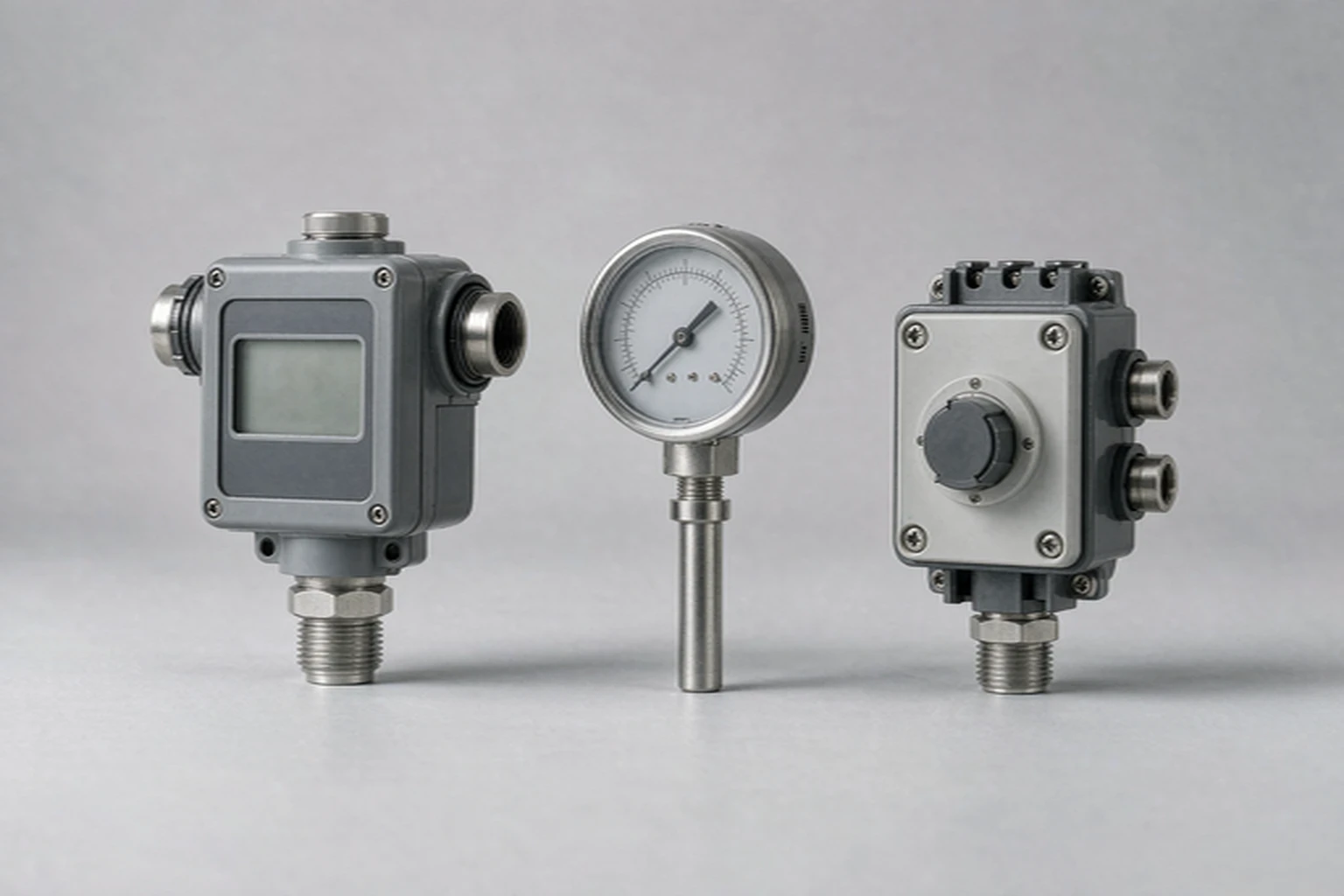
Temperature instrument types
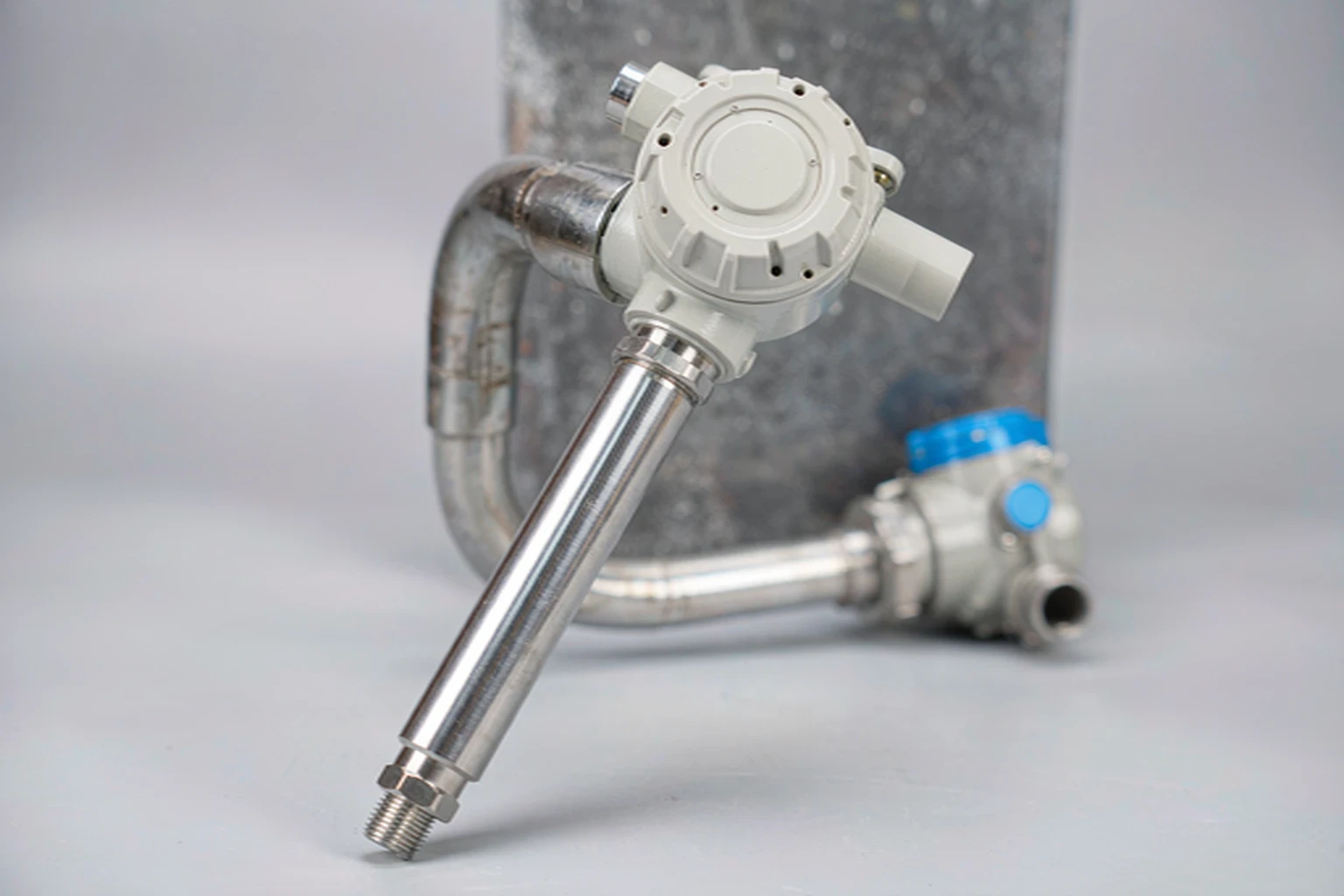
Integrated Temperature Transmitter
The sensor and transmitter are built into one head, converting the resistance or voltage signal into a standard transmission signal at the measuring point. This shortens the weak-signal run and makes calibration a single-point job. Input type and range are configurable.
Typical application: Long cable runs, retrofit projects and points that need a standard loop signal.
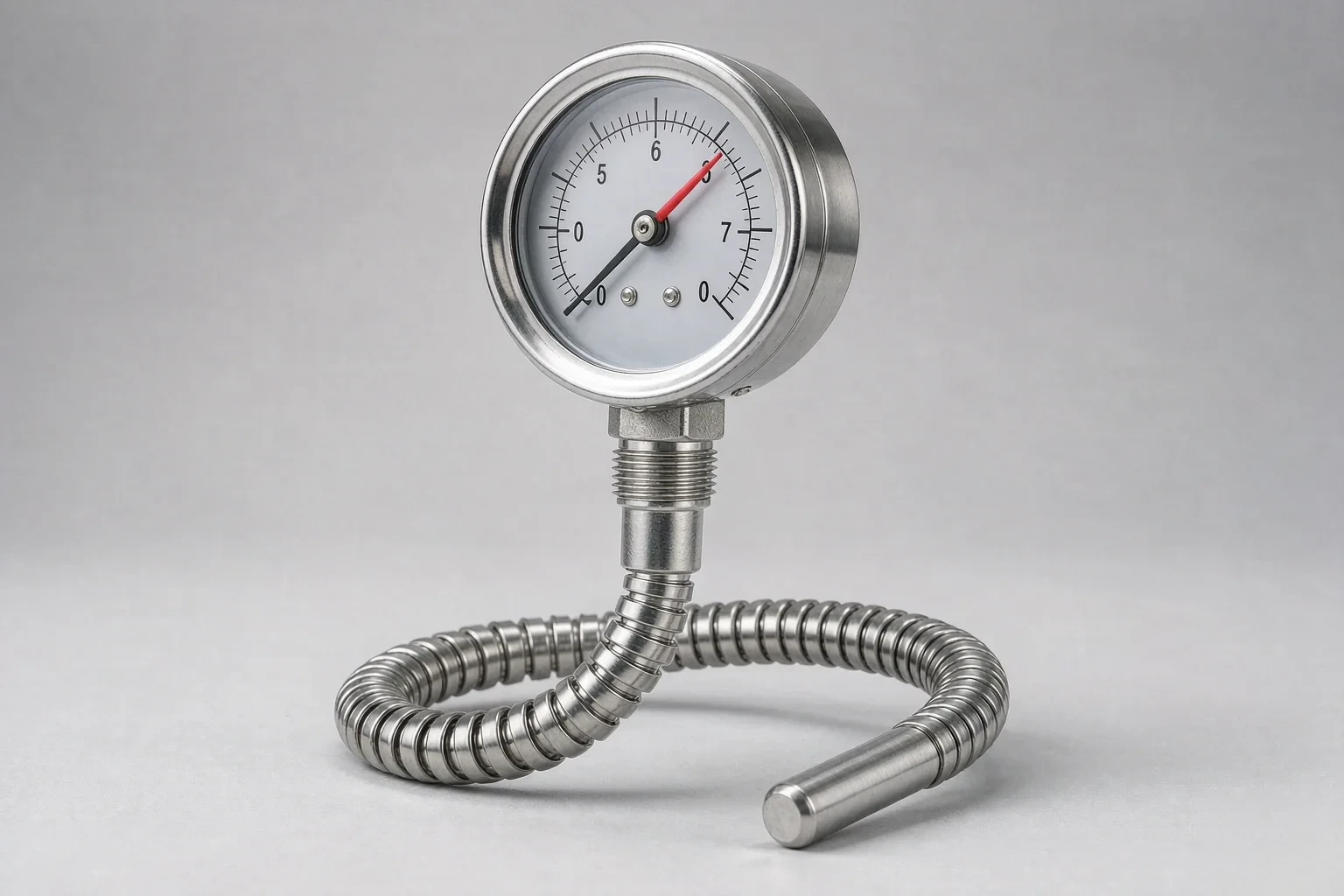
Bimetal Thermometer
Two bonded metal strips expand at different rates and bend the pointer as temperature changes. The dial is read locally and needs no power. Case, dial size and connection are chosen for the installation.
Typical application: Pipes, tanks and HVAC or utility systems for on-site indication.
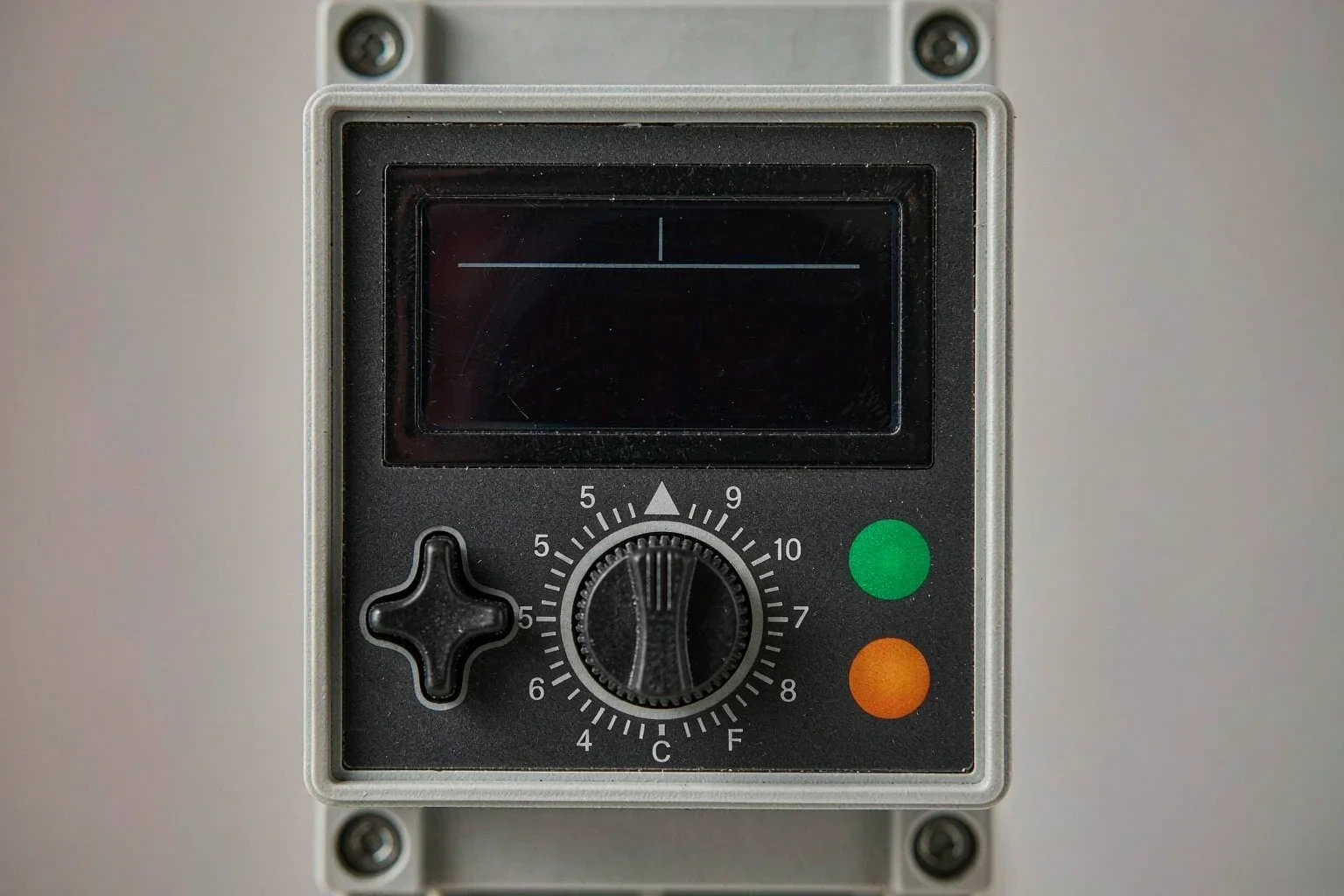
Digital Temperature Switch
Shows the current value on a display and switches relay outputs when the setpoint is crossed. It can replace separate meter and relay devices at an unattended point. Setpoints and output configuration are set to the process.
Typical application: Unattended equipment, cooling lines and alarm or shutdown duty.
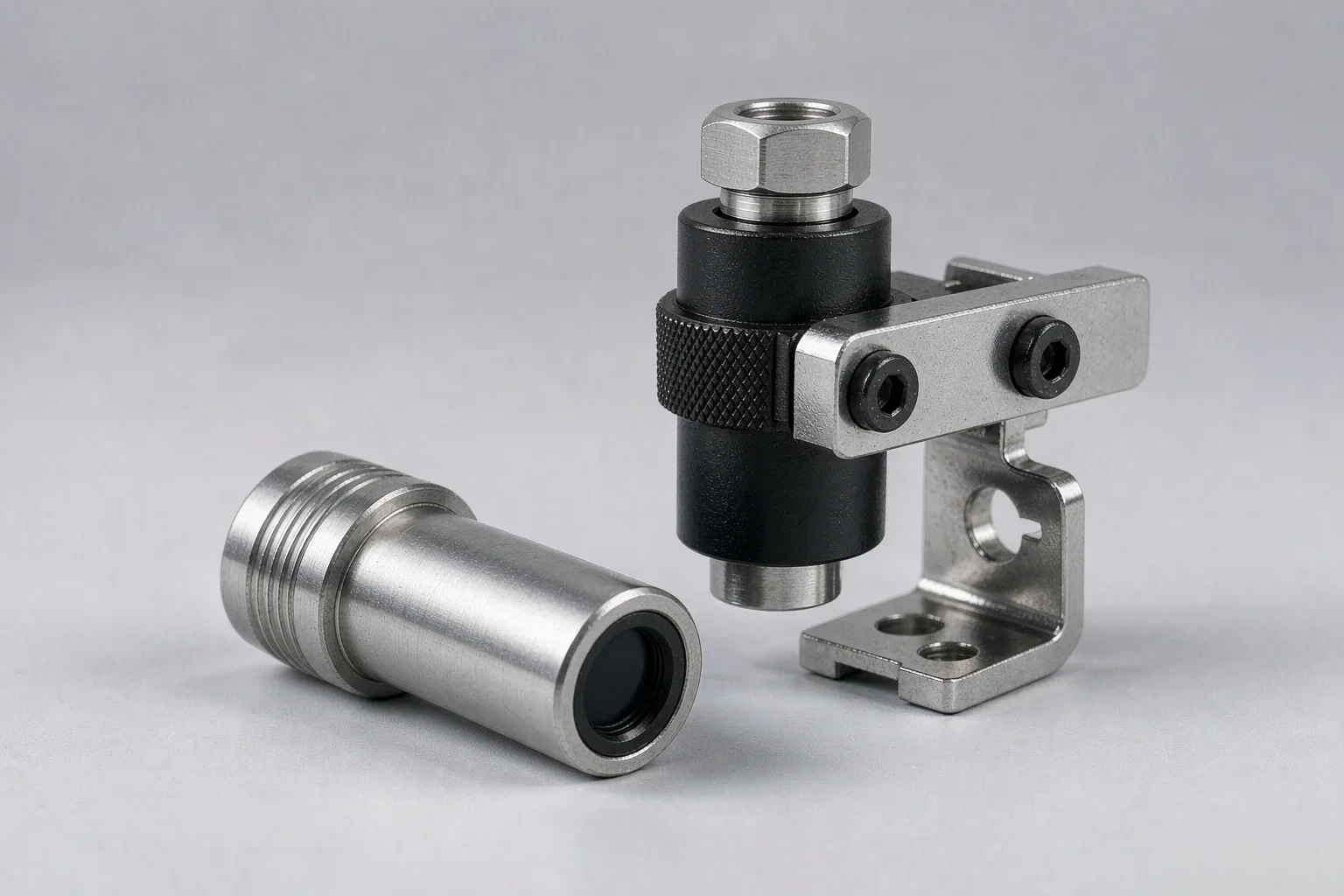
Non-Contact Temperature Sensor
Measures infrared energy radiated by a surface, so no probe touches the medium. It is used where the target moves, is electrically live, or cannot be contacted. Optics and mounting are selected for the target and distance.
Typical application: Moving webs, rotating equipment, high-temperature surfaces and inaccessible targets.
Specifications
| Model | Measuring range | Accuracy | Output signal | Connection | IP rating |
|---|---|---|---|---|---|
| Integrated Temperature Transmitter | configurable to the operating conditions | configurable to the operating conditions | configurable to the operating conditions | configurable to the operating conditions | configurable to the operating conditions |
| Bimetal Thermometer | configurable to the operating conditions | configurable to the operating conditions | configurable to the operating conditions | configurable to the operating conditions | configurable to the operating conditions |
| Digital Temperature Switch | configurable to the operating conditions | configurable to the operating conditions | configurable to the operating conditions | configurable to the operating conditions | configurable to the operating conditions |
| Non-Contact Temperature Sensor | configurable to the operating conditions | configurable to the operating conditions | configurable to the operating conditions | configurable to the operating conditions | configurable to the operating conditions |
All technical specifications are confirmed against the actual operating conditions; values not confirmed are stated as configurable.
Frequently asked questions
Do I need a transmitter if my controller already accepts an RTD input?
Not always. If the sensor is close to the controller, a direct input is fine. For long cable runs, a transmitter at the head keeps the signal from degrading.
Can a bimetal thermometer provide a remote reading?
A local bimetal dial can be fitted with a remote transmission element if required. Tell us whether you need indication only or a signal as well.
What setpoint accuracy can a temperature switch deliver?
It depends on the sensing element and the process. We confirm the setpoint and switching behaviour against your conditions rather than quote a generic figure.
Have a measuring point to spec?
Send the medium, operating temperature and installation. We will come back with the instrument type, connection and signal.